
NutriCentury · Food & Health
Quick Answer
Low Purine · 8 mg per 100 g · REFERENCE [1]
52 kcal / 100 g
Raspberry is generally suitable for a gout-friendly diet in the form listed.
Whole Fruits · ⓘ Flare evidenceHow Much Purine Is in Raspberry?
- REFERENCE: 8 mg per 100 g as reported · [1]
Purine Direkt record 264 reports 8 mg purines per 100 g for raspberries. Species, preparation, sampled part, edible-portion basis and analytical method are unspecified. Reference value from a secondary source. No entry for raspberries was found in the USDA/ODS-NIH purine database, so this value is shown with its limitations. See Methodology. The source lists 20 mg/100 g separately in its uric acid column.
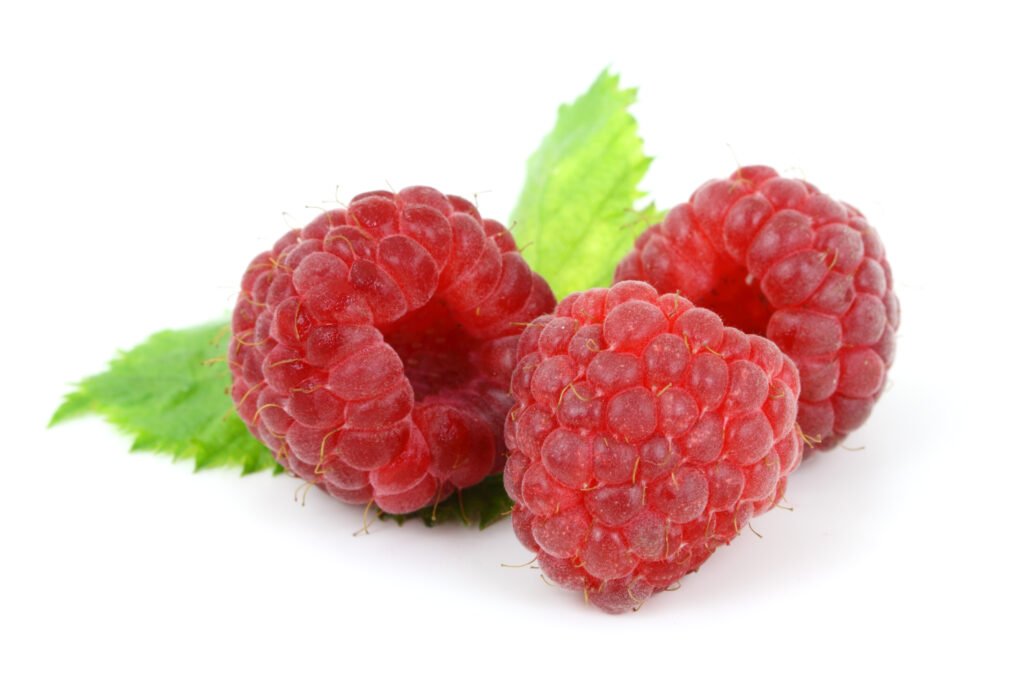
Raspberries are classified as low in purines and are grouped with whole fruits. The published reference figure above does not specify the preparation or whether the weight refers to the edible portion. [1]
Raspberry Nutrition Facts & Serving Size Calculator
Raspberries, raw
Showing a 100 g edible portion.
Edible weight only. Nutrition values scale by weight; health ratings do not.
Nutrition Overview
For your 100 g edible portion
Nutrition Facts Table
| Nutrient | Amount | % Daily Value |
|---|---|---|
| Purines | REFERENCE: 8 mg per 100 g as reported | N/A |
| Macronutrients | ||
| Calories | 52 kcal | N/A |
| Total Sugars | 4.42 g | N/A |
| Dietary Fiber | 6.5 g | 23.2% |
| Fatty acids, total saturated | 0.019 g | <0.1% |
| Minerals | ||
| Sodium, Na | 1 mg | <0.1% |
| Potassium, K | 151 mg | 3.2% |
About %DV · FDA references for adults and children aged 4 and older. Percentages are calculated from unrounded amounts and rounded only for display; this is an interactive reference, not a packaged-food label.
N/A means a reference or compatible verified data is unavailable. Total Sugars has no FDA DV. Added Sugars is separate and is never inferred. Protein %DV requires verified protein-quality correction; plain niacin is not niacin equivalents.
Nutrition evidence: Owner-curated. Synced 2026-11-25 15:45:05 UTC.
- [4] — 167755; accessed 2026-11-24
Is Raspberry Good for Uric Acid?
Plain raspberries are a reasonable choice if you are watching your uric acid. Your body makes uric acid when it breaks down purines, and raspberries add little purine to a meal. The evidence cited here does not show that eating raspberries lowers blood uric acid.
Raspberries contain fiber and naturally occurring sugars. The total sugar value does not tell you how much fructose they contain. Studies show that the effect on uric acid varies by food source, so results from sugar-sweetened drinks do not tell us how plain raspberries affect uric acid.
[5] [6] [7]Can Raspberry Trigger a Gout Attack?
There is not enough reviewed evidence in this guide to determine whether Raspberry can trigger a gout attack.
Purine content and gout-attack triggers are different questions. Purine measurements alone do not establish whether a food triggers an attack. Other potentially relevant factors require their own reviewed evidence; no conclusion about them is inferred here.
Research on dietary purines and recurrent gout attacks looked at overall intake and broad food sources. It did not establish whether raspberries trigger attacks or identify a raspberry serving threshold. If you notice a recurring pattern, note the portion, preparation, and what else you ate. [8]
Different Forms and Preparation Methods
Fresh and plain frozen raspberries are whole-fruit options. Check the label for added sugar when buying frozen berries, jam, or raspberry drinks. The reference measurement does not establish the purine content of juice, jam, or dried raspberries.
[9] [1]Raspberry vs. Similar Foods
- Strawberry · Low purine · 2.1 mg/100 g
- Apple · Low purine · 6 mg/100 g
- Blueberry · Low purine · 10 mg/100 g
- Banana · Low purine · 3.0 mg/100 g
- Avocado · Low purine · 18.4 mg/100 g
Frequently Asked Questions
Are raspberries good or bad for high uric acid?
Plain raspberries are generally suitable because they add little purine to a meal. Eating them has not been shown to lower blood uric acid.
Can I add frozen raspberries to plain yogurt?
Yes. Plain frozen raspberries work as a whole-fruit topping. Check the package if you want an option without added sugar.
Nutrition and purine figures are provided for informational and reference purposes based on cited sources, and are not a substitute for personalized medical advice.
Sources & References
Nutrition Data Sources
- Purine Direkt — 264 · REFERENCE · Purine Direkt record 264 reports 8 mg purines per 100 g for raspberries. Species, preparation, sampled part, edible-portion basis and analytical method are unspecified. Reference value from a secondary source. No entry for raspberries was found in the USDA/ODS-NIH purine database, so this value is shown with its limitations. See Methodology. The source lists 20 mg/100 g separately in its uric acid column.
- FDA Daily Values
- Protein %DV method
- USDA Agricultural Research Service — FoodData Central
Medical & Scientific References
- Royal United Hospitals Bath NHS — Dietary Advice For Gout
- 2020 American College of Rheumatology Guideline for the Management of Gout
- Different food sources of fructose-containing sugars and fasting blood uric acid levels: a systematic review and meta-analysis of controlled feeding trials
- Purine-rich foods intake and recurrent gout attacks
- Health Canada — Eat vegetables and fruits